Board Member Spotlight: Sheena Lambert
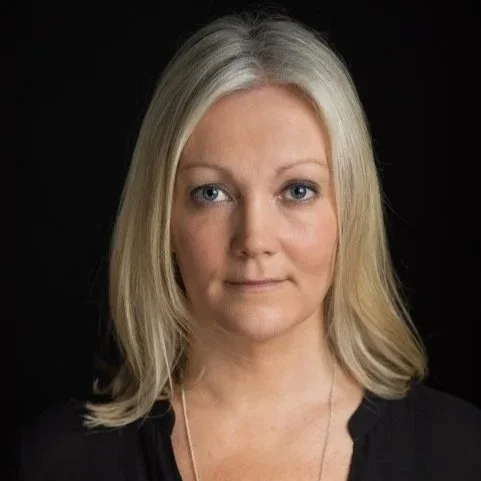
Meet Sheena Lambert, a member of the Remarkable Women Project Global Advisory
Committee.
Sheena Lambert is an accomplished screenwriter and is a working on various multimedia projects for the global Remarkable Women Project, which shares untold stories of remarkable women around the world. In March 2025, she moderated a panel discussion featuring Ireland’s most respected actresses featured the first Remarkable Women Global Summit in Dublin.
Here’s my interview with Sheena.
Jane Applegate (JA): You’ve had a remarkable run of professional successes in the last few months. Your Cosima play is a major hit in theaters across Ireland and your Irish- language film, The Lake, based on your novel won several film festival awards and an award for best music given by the Irish Film and TV Assn.
Sheena Lambert (SL): My feature film, BÁITE was nominated for four IFTA awards which are the Irish equivalent of the BAFTAs. One of the nominations was for Best Script. I lost out to Maggie O’Farrell/Chloe Zhao’s Hamnet which was sad but not unexpected LOL.
We won an IFTA for Best Original Music which I was thrilled about. The first woman to conduct the Academy Awards’ orchestra, Irishwoman Eimear Noone, composed the BÁITE soundtrack with her husband Craig Stuart Garfinkle. We were thrilled to bring that IFTA home!
JA: Tell me what inspired you to write that book and why it seemed perfect for adapting into a screenplay? Who did you work with to get the film produced?
SL: There is a manmade lake not far from where I live in Ireland that resulted from the building of a hydroelectric dam in the 1950s. A rural village lies at the bottom of that lake, and the story of the people who used to live there, and the generation after, was fascinating to me. Separately, I was keen to write about a young woman of the 1970s Women’s Lib era, and so those two ideas collided to form my novel The Lakewhich was published by HarperCollins in 2015. Initially, I adapted the novel as a play, and then Danú Media, an Irish TV and Film production company, optioned the film rights.
JA: You also adapted Cosima from a feature script you wrote into a one-woman show. Why are adaptations so appealing to you?
SL: I had originally planned to write a novel that dramatized the very dramatic life of Cosima Wagner, the composer’s wife and daughter of Franz Liszt. But, as I researched the book, it became clear to me that her story belonged on screen. The screenplay got optioned quite quickly, but then it ran into some Covid-related difficulties. I wrote the Cosima one-woman stage play out of frustration at not being able to tell her story, but it has found an award-winning life of its own and continues to tour Ireland. Now, it looks like there might be renewed interest in the feature film, which is a lesson to all writers not to give up!
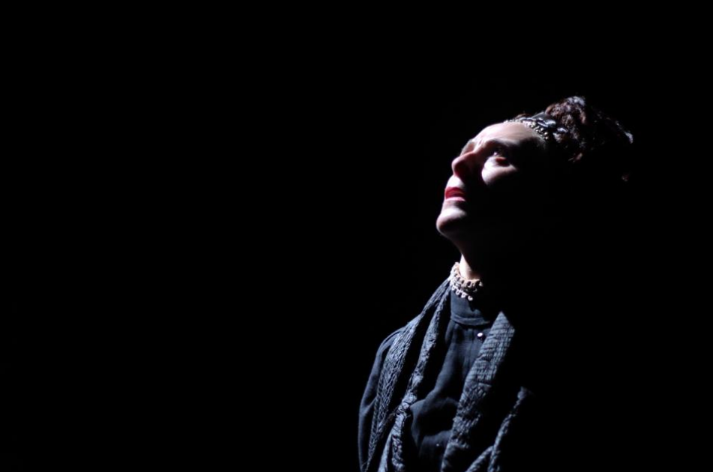
Mary Murray playing Cosima Wagner
JA: You’ve had a very unusual career path, from being an environmental engineer to writer/director/ producer. What prompted you to change careers in mid-life? What was the biggest challenge in making that decision?
SL: My job as a waste management engineer involved long hours and large teams of staff working 24- hour shifts. It was incompatible with my other job as mother to two young boys and so I took some time out. I happened on a Creative Writing evening class thinking it might be a nice distraction for a couple of hours a week and, totally unexpectedly, found my tribe. The biggest challenge to starting a writing career in my thirties was definitely the drop in salary!
JA: Did you take film classes? Seek out advice from mentors? How did you make the transition? Did you tap into savings to fund your new career?
SL: We are blessed in Ireland to have a government-funded body called Screen Ireland (Fís Éireann). It is tasked with supporting the film and TV industry, from training and mentoring through to development, production, distribution and everything else that goes with TV and filmmaking.
They regularly run classes in all sorts of areas, for writers, producers, crew etc. I availed, and continue to avail, of any screenwriting classes and funding opportunities I could. Screen Ireland is very much responsible for the success of the Irish film industry, and the positive impact it has had on the Irish economy in recent years.
JA: What’s next on your list for creative projects?
SL: I currently have three feature film scripts in various stages of pre-production with producers and directors attached, some with talent (tentatively) attached. Another feature film project on my desk is an adaptation of a hilarious sports memoir that I read and optioned and am now in talks with American and Irish producers. I also have a returnable TV comedy series, set in the waste industry, in development with a wonderful Irish comedy producer. Write what you know!
JA: What’s your writing process like? Do you work on a schedule every day? Are you a night owl or an early bird?
SL: If I could get away with it, I would write all day, every day, although I usually run out of steam by 10 p.m. I still have school drop, so I’m at my desk with my first of many coffees by 9 a.m. and, depending on which deadline is looming, I plan or write or edit. I love that screenwriting involves engagement with others, be they script editors or producers or directors. I found novel-writing very solitary. Screenwriting and playwrighting is much more fun.
JA: What advice do you have for someone reading this who dreams of quitting their job to pursue a creative career?
SL: I’m pretty practical – but once I found writing, I found I couldn’t ever conceive of doing anything else. I was lucky to have a brilliant spouse who was happy to be along for the ride and who understood that it would take time to build a new career. But honestly, if I had to, I’d sell everything and go live under rock. Once I had some paper and a pen.
JA: Anything else you’d like to add?
SL: Meeting people like Jane Applegate has been one of the best parts of my new writing career.
for this and many more interviews, blog posts, and all things Remarkable Women…